Daily Barrel: Oil Prices, Rig Count & Independent Operators
Oil steadies near $72 Brent, U.S. rigs rise, and independent operators face a market rewarding cash flow, discipline, and local knowledge.
# Daily Barrel | June 29, 2026
## Oil Calms Down, Rigs Move Higher, and Mom-and-Pop Operators Get a Real Market Again
Welcome to this edition of the **Daily Barrel** on **Wildcatters Intelligence**, delivering the latest **oil and gas news today**.
For most of June, oil traders were watching the Middle East like it was the only screen in the room. That made sense. The U.S.-Iran conflict, the Strait of Hormuz, and the return of Gulf shipping had turned crude into a geopolitical scoreboard. Every headline moved **oil prices today**, and for a few weeks, it felt like the oil market had stopped trading supply and demand and started trading fear.
Now the market is trying to act normal again.

*Figure 1: A premium oil supertanker sailing through a calm shipping channel at sunrise. Source: Wildcatters Intelligence.*
Reuters reported Monday that oil prices steadied after the U.S. and Iran agreed to halt recent attacks and resume talks over the Strait of Hormuz. **Brent crude** was trading around $72 per barrel, while **WTI crude** was near $70, a long way from the panic pricing that dominated earlier in the month.
Reuters:
https://www.reuters.com/business/energy/oil-climbs-following-renewed-us-iran-strikes-middle-east-2026-06-28/
That does not mean the risk is gone. It means traders are no longer paying full price for the worst-case scenario. Middle East producers are working to resume normal loading schedules, tanker traffic has improved, and the market is beginning to believe that oil flows may recover without a prolonged shutdown. But nobody in the oil business needs to be reminded that “calm” in the Strait of Hormuz can have a short shelf life.
For U.S. producers, this is where things get interesting. Oil in the high $60s to low $70s is not a disaster. It is also not a free-money market. It separates operators who can produce efficiently from those who need higher prices to make the math work. When crude was above $100, almost every barrel looked good. Around $70, lease operating expenses, debt costs, gathering fees, workover discipline, and overhead suddenly matter again.
---
## Baker Hughes Rig Count: U.S. Active Drilling Rigs Climb to 573
The latest **Baker Hughes rig count** indicates that active drilling rigs in the U.S. rose to 573 as of June 26, up 10 rigs from the prior count. Oil rigs increased, gas rigs also improved, and the total **rig count** is now higher than it was a year ago.
Baker Hughes:
https://rigcount.bakerhughes.com/
The increase suggests operators are not freezing. They are still working. But the activity does not look like the old shale boom, where higher prices automatically triggered a race to add rigs. This market is more careful. Operators are drilling, but investors still want discipline. Banks still care about borrowing costs. Buyers still want cash flow. Nobody wants to be the guy who overpays for acreage right before prices soften again.
---
## Dallas Fed Energy Survey: Industry Executives Forecast Modest Shale Growth
The Dallas Fed’s energy survey tells a similar story. Executives expect U.S. oil production to increase in response to the Iran war, but only modestly. The most common answer for 2026 was growth of more than zero but not more than 0.25 million barrels per day. For 2027, the most common response was more than 0.25 million but not more than 0.50 million barrels per day.
Dallas Fed Energy Survey:
https://www.dallasfed.org/research/surveys/des/2026/2601/2601update
That is not “drill, baby, drill.” That is “drill, but don’t blow up the balance sheet.”
---
## Independent Oil Operators: How Mom-and-Pop Oil Gains the Asset Edge
This is exactly the kind of environment where **independent oil operators** can matter more than people think. Big Oil is still going to dominate headlines. Exxon, Chevron, Shell, BP, and the public Permian names will always get the attention. But the smaller market is where a lot of real opportunity lives: mature producing assets, PDP packages, **mineral rights** interests, non-op positions, small water assets, and leases that are too small for a public company but meaningful for a private buyer.
For **mom and pop oil** operators, the advantage is not size. It is knowing the asset better than the spreadsheet does. It is knowing which well needs a workover, which lease has a title issue, which seller is tired, which pumper is reliable, and which field still has a little room left if someone pays attention.
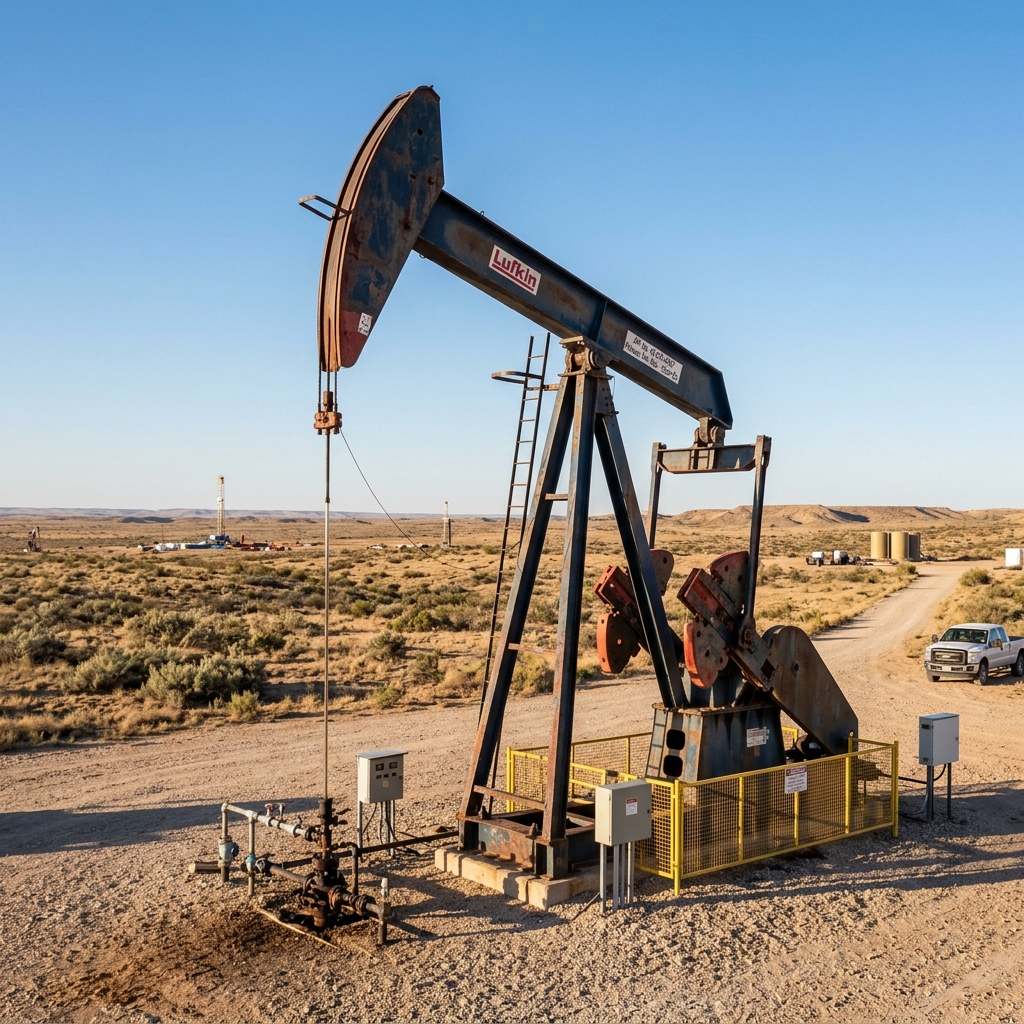
*Figure 2: An active pumpjack operating on a mature oil asset in the Permian Basin. Source: Wildcatters.*
The same goes for landmen and brokers. In a disciplined market, good information gets more valuable. When everyone is chasing hype, bad deals can still get funded. When capital gets careful, clean packages win. Clear ownership wins. Real production history wins. Honest decline curves win. Buyers want to know what they are actually buying, and sellers who can present assets professionally are going to have an edge.
---
## Oil and Gas Investing: Tighter Capital Markets Shift Focus to PDP Cash Flow
The national economy is not making this simpler. Treasury yields remain elevated, markets are still debating whether the Federal Reserve may hike again, and capital is not as cheap as it was during the last shale expansion. Higher rates matter for acquisitions. They matter for drilling programs. They matter for private buyers trying to raise $5 million, $25 million, or $100 million to buy assets. This is why **oil and gas investing** has shifted to a capital market story.
Barron’s:
https://www.barrons.com/livecoverage/stock-market-news-today-062926/card/u-s-treasury-yields-rise-focus-remains-on-ship-traffic-in-strait-of-hormuz-KCtxwInA342KCtlZMxit
Oil prices have calmed down, but capital is still picky. The best operators will be the ones who can show investors exactly how money gets returned. Not in a 40-slide fantasy deck, but through production, operating costs, reserves, hedges, title, and a realistic exit plan.
The bottom line is simple: the market is no longer paying everyone for chaos. It is starting to pay people for execution.
That is good news for serious independent operators. It is good news for brokers who know how to package deals. It is good news for mineral owners who understand timing. And it is good news for Wildcatters readers who know that the best oil and gas opportunities usually show up before they become obvious.
---
## What This Means for Mom-and-Pop Oil: Going Back to Basics
If oil settles around $70, the easy money trade is probably over. But that does not mean the opportunity is gone. It means the market is going back to basics.
Buyers will care more about PDP cash flow. Mineral buyers will underwrite more carefully. Operators will have to prove they can make money without relying on another geopolitical spike. Sellers may need to adjust expectations, but quality assets should still move.
For independent operators, this may be the setup they have been waiting for. Big companies are focused on scale. Wall Street is focused on discipline. Smaller buyers can focus on assets that are too small for the majors but still meaningful in the real world.
That is where local knowledge wins.
---
## Top Reads Today
* **Reuters**: Oil steadies after U.S. and Iran agree to halt attacks
https://www.reuters.com/business/energy/oil-climbs-following-renewed-us-iran-strikes-middle-east-2026-06-28/
* **Baker Hughes Rig Count**
https://rigcount.bakerhughes.com/
* **Dallas Fed Energy Survey**
https://www.dallasfed.org/research/surveys/des/2026/2601/2601update
* **EIA Short-Term Energy Outlook**
https://www.eia.gov/outlooks/steo/
* **EIA Global Oil Markets**
https://www.eia.gov/outlooks/steo/report/global_oil.php
* **OPEC World Oil Outlook**
https://www.opec.org/opec_web/en/publications/340.htm