America's Energy Market Is Sending Two Different Messages
Oil prices remain elevated on geopolitical risk, but capital markets prioritize returns over speculative growth. We analyze the U.S. natural gas boom, independent operator opportunities, and structural inflation.
For much of the past month, energy markets have been dominated by geopolitical headlines.
The Strait of Hormuz. Iranian supply disruptions. Global shipping concerns. Crude inventory draws.
The assumption has been straightforward: higher risk should mean higher prices, higher prices should mean more drilling, and more drilling should mean another growth cycle for U.S. producers.
Yet that's not what the market is showing.
In fact, the most important energy story in America this week may be that oil and gas companies are behaving as if they don't fully trust the current rally.
Oil prices remain elevated by historical standards. The U.S. Energy Information Administration continues to forecast tighter global inventories through much of the year, while traders remain focused on potential disruptions affecting roughly one-fifth of global oil shipments that pass through the Strait of Hormuz.
Source:
https://www.eia.gov/outlooks/steo/
But while oil markets are trading on supply fears, capital markets appear to be trading on discipline.
That distinction matters.
For years, the American shale industry was known for responding quickly to higher prices. When crude moved higher, operators added rigs, expanded drilling programs, and raised capital.
Today's industry looks very different.
According to Reuters, upstream oil and gas transactions reached approximately $38 billion during the first quarter, marking the strongest quarter for deal activity in nearly two years.
Source:
https://www.reuters.com/legal/transactional/us-upstream-oil-gas-dealmaking-hit-two-year-high-q1-2026-2026-05-13/
But much of that capital isn't flowing toward aggressive drilling programs.
It's flowing toward existing production.
Producing reserves.
Minerals.
Royalties.
Infrastructure.
Natural gas assets.
Investors appear increasingly interested in buying cash flow rather than funding growth.
That shift is visible across the country.
In Texas, operators continue focusing on operational efficiency rather than expansion at any cost.
In Appalachia, investors are positioning around long-term natural gas demand.
Along the Gulf Coast, billions of dollars continue flowing into LNG infrastructure as the United States strengthens its position as one of the world's most important natural gas exporters.
The market's message is becoming clearer.
Energy is attractive.
Energy speculation is not.
## The Return of Natural Gas
While oil prices dominate headlines, natural gas may quietly be becoming the more important investment story.
This week continued a trend that has been building throughout the year.
Global investors are pouring money into natural gas infrastructure.
The International Energy Agency recently projected natural gas investment will reach its highest level in more than a decade, driven largely by LNG demand, power generation needs, and energy security concerns.
Source:
https://www.reuters.com/business/energy/natural-gas-spending-hit-10-year-high-2026-oil-investment-falls-iea-says-2026-05-28/
The implications for the United States are significant.
Unlike many global competitors, the U.S. possesses vast natural gas resources, an expanding export network, and access to both Atlantic and Pacific markets through LNG facilities.
That combination is increasingly attracting institutional capital.
One of the week's more notable developments came from commodities trader Gunvor, which backed a new acquisition platform focused on U.S. natural gas assets.
Source:
https://www.reuters.com/legal/litigation/commodities-trader-gunvor-funds-venture-buy-us-natural-gas-production-2026-06-10/
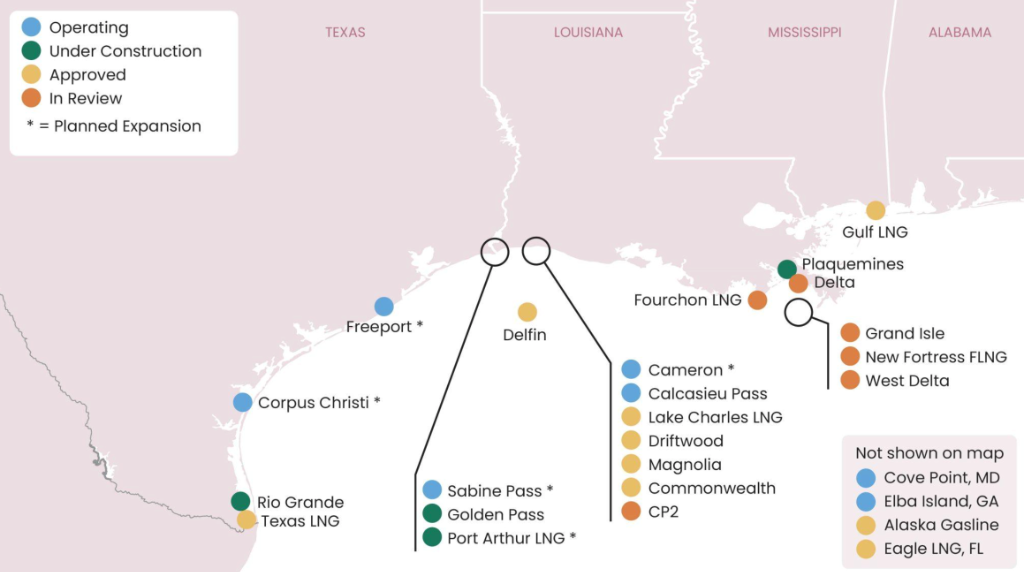
*Figure 1: Map of operational, approved, and under-construction LNG export terminals along the U.S. Gulf Coast. Expanded liquefaction capacity positions the U.S. to capture long-term global gas demand. Source: Infrastructure Analysis.*
The transaction itself is relatively small compared to industry mega-deals.
The message behind it is much bigger.
Sophisticated investors are betting on long-term gas demand.
## Why Independent Operators May Be Better Positioned Than Expected
Perhaps the most overlooked consequence of industry consolidation is the opportunity it creates.
Large operators continue getting larger.
Exxon.
Chevron.
ConocoPhillips.
Devon.
Coterra.
The list continues growing.
But consolidation creates leftovers.
Assets that no longer fit corporate strategy.
Producing properties too small to move the needle.
Mineral packages that fall outside development plans.
Infrastructure assets that no longer align with core operations.
For independent operators, these assets can be highly attractive.
A package producing 300 barrels per day means very little to a supermajor.
For a private operator, it can represent a meaningful acquisition.
The same dynamic applies to mineral owners, family offices, private investors, and regional operators.
As larger companies become more selective, local knowledge becomes increasingly valuable.
This is where brokers and landmen continue playing a critical role.
Wall Street provides capital.
The field still provides opportunities.
Many of the industry's most attractive acquisitions never appear in a public auction.
They begin with relationships.
Title research.
Local market knowledge.
Conversations between buyers and sellers who understand the asset.
The industry's future may be increasingly digital, but many of its best deals still originate the old-fashioned way.
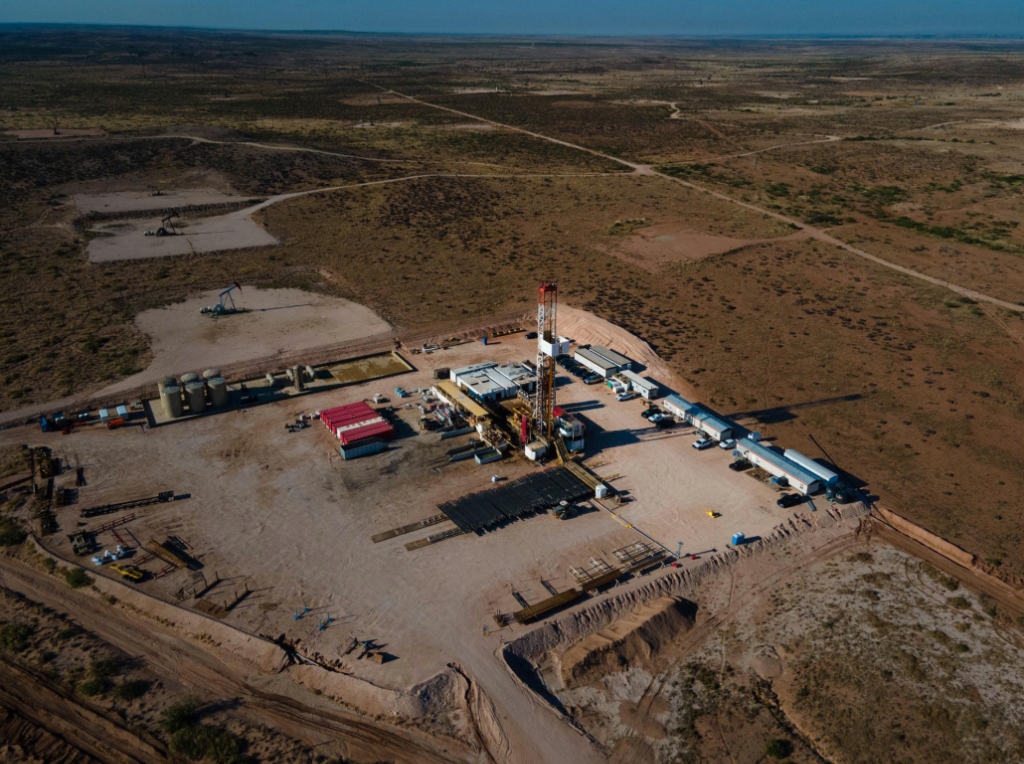
*Figure 2: An aerial view of an independent land drilling rig operating in West Texas. Public consolidation creates non-core packages and mature fields that are highly attractive to regional operators. Source: Field Intelligence.*
## The Economic Question Nobody Has Answered
The biggest uncertainty facing the industry isn't oil supply.
It's the economy.
Inflation remains stubborn.
Interest rates remain elevated.
Corporate borrowing costs remain significantly higher than they were during much of the shale boom.
Those realities affect every operator.
Higher oil prices help revenue.
They do not reduce financing costs.
They do not lower labor expenses.
They do not reduce steel prices or insurance premiums.
As a result, the industry's strongest operators are increasingly those capable of protecting margins rather than simply increasing production.
That may be the defining characteristic of this cycle.
The winners are not necessarily producing the most barrels.
The winners are generating the highest returns on every barrel produced.

*Figure 3: The Houston, Texas downtown skyline and energy corridor. High interest rates and stubborn inflation require energy operators to maintain absolute capital discipline. Source: Urban Operations.*
## What We're Watching
Over the next several weeks, four stories will likely determine the direction of the market:
1. Whether oil can remain above $90 despite economic uncertainty.
2. Whether LNG demand continues attracting capital toward U.S. natural gas.
3. Whether upstream acquisition activity accelerates further.
4. Whether independent operators can capitalize on opportunities created by industry consolidation.
For now, the message from energy markets appears surprisingly balanced.
Oil is strong.
Natural gas is attracting capital.
Investors are returning.
But nobody is in a hurry.
And that may be the clearest sign yet that this cycle is different from the last one.
### Top Reads of the Day
EIA Short-Term Energy Outlook
https://www.eia.gov/outlooks/steo/
Reuters: U.S. Upstream M&A Hits Two-Year High
https://www.reuters.com/legal/transactional/us-upstream-oil-gas-dealmaking-hit-two-year-high-q1-2026-2026-05-13/
Reuters: Gunvor Backs U.S. Natural Gas Acquisition Platform
https://www.reuters.com/legal/litigation/commodities-trader-gunvor-funds-venture-buy-us-natural-gas-production-2026-06-10/
Reuters: Natural Gas Investment Hits 10-Year High
https://www.reuters.com/business/energy/natural-gas-spending-hit-10-year-high-2026-oil-investment-falls-iea-says-2026-05-28/
Reuters Energy
https://www.reuters.com/business/energy/