Oil Rises, Canada Burns, and the Permian Keeps Dealing | Daily Barrel
Wildcatters EditorialDaily Barrel | July 16, 2026
Oil Is Back Above $80, Canada Is on Fire, and the Permian Is Still Shopping
Welcome to this edition of the Daily Barrel on Wildcatters Intelligence, delivering the most crucial oil and gas news July 16 2026.
Good morning. The Strait of Hormuz has apparently put the "Do Not Disturb" sign back on the door, oil traders are once again pretending they can predict geopolitics, and Canadian producers are watching wildfire maps with the same intensity Texans reserve for radar during hail season. Meanwhile, the Permian Basin keeps doing what it does best. Operators are filing permits, mineral buyers are writing checks, and smaller companies are looking for the kind of deals that will never receive a television countdown clock.
That is the oil business this morning. The international story is loud. The local story may be more important.
Strait of Hormuz: Shipping Lanes and Geopolitical Risk Premiums Return
Oil prices remained near one-month highs Thursday as the renewed confrontation between the United States and Iran kept supply concerns alive. Reuters reported Brent crude near $85 per barrel and West Texas Intermediate near $80, with traders watching reduced vessel traffic through the Strait of Hormuz and the possibility of wider disruptions across Gulf energy infrastructure.
Reuters: Oil prices rise 4th day on U.S.-Iran strikes
https://www.reuters.com/business/energy/oil-prices-rise-4th-day-us-strikes-iran-raise-fears-wider-conflict-2026-07-16/
The market’s reaction has been notable because it has not quite matched the drama of the headlines. The United States has struck Iranian defensive positions, Iran has threatened retaliation, and shipping through Hormuz has slowed. Yet crude has not exploded toward the most aggressive forecasts being passed around a few weeks ago.
That suggests traders are caught between two realities: the geopolitical risk is real, but the physical market has become better at adapting. Cargoes are rerouted. Inventories are pulled. Governments negotiate exemptions. Producers use alternate export routes where possible. The global oil system bends before it breaks.
Unfortunately, bending is expensive. Insurance premiums rise. Freight rates increase. Refiners pay more to secure replacement barrels. Shipping schedules become unreliable. Even when crude continues moving, the cost of moving it can work its way into gasoline, diesel, jet fuel, and eventually nearly everything delivered by a truck.
The Strait remains essential because roughly one-fifth of global oil and LNG shipments normally move through the waterway. Iran may not need to stop every tanker to move the market. It only needs enough uncertainty to make shipowners, insurers, traders, and refiners nervous.
If Hormuz had a customer service department, its current recorded message would probably say: “Your shipment is important to us. Please remain on hold while two countries argue over maritime access.”
EIA overview of global oil transit chokepoints:
https://www.eia.gov/international/analysis/special-topics/World_Oil_Transit_Chokepoints
Gulf Markets Under Pressure: Maritime Chokepoint Disruptions Subdue Sentiment
The impact is not limited to oil futures. Reuters reported that Gulf stock markets were subdued as renewed U.S. strikes and Iranian threats weighed on sentiment. Maritime disruptions have also hurt activity at Fujairah, the major fuel and bunkering hub located outside the Strait.
Reuters: Most Gulf markets subdued amid strikes
https://www.reuters.com/world/middle-east/most-gulf-markets-subdued-amid-renewed-us-strikes-iran-2026-07-16/
This matters because the Gulf is not simply a collection of oil wells. It is a deeply connected system of ports, storage terminals, refineries, banks, shipping companies, airlines, and logistics businesses. When the movement of crude slows, the economic effect spreads beyond producers.
The current conflict is also reinforcing a long-term investment theme. Gulf nations want more pipelines and export infrastructure capable of bypassing vulnerable waterways. Europe wants additional supply options. Asian refiners want diversity. The United States wants lower fuel prices without becoming more exposed to overseas disruptions.
Everybody wants flexibility. Nobody wants to pay for it.
That contradiction will create major infrastructure opportunities, but it also explains why existing pipelines, export terminals, storage facilities, and producing assets continue attracting capital.
Canada Wildfires Oil Sands: Boreal Forest Fires Near Alberta Facilities
Canada is once again dealing with wildfire risk across energy-producing regions. Fires near Alberta’s oil sands have not necessarily caused a major nationwide production collapse this season, but their proximity to important facilities is enough to keep operators and traders alert.
Reuters reported earlier in the season that active fires were burning near the Fort McMurray and Lac La Biche regions, including areas close to major in-situ oil sands operations. Previous wildfire seasons have forced companies to evacuate workers and shut in hundreds of thousands of barrels per day as a precaution.
Reuters: Wildfire season returns to Canada's oil sands
https://www.reuters.com/business/energy/wildfire-season-returns-canadas-oil-sands-2026-05-31/
EnergyNow coverage: Wildfires break out in oil sands region
https://energynow.com/2026/06/wildfires-break-out-in-canadas-oil-sands-region/
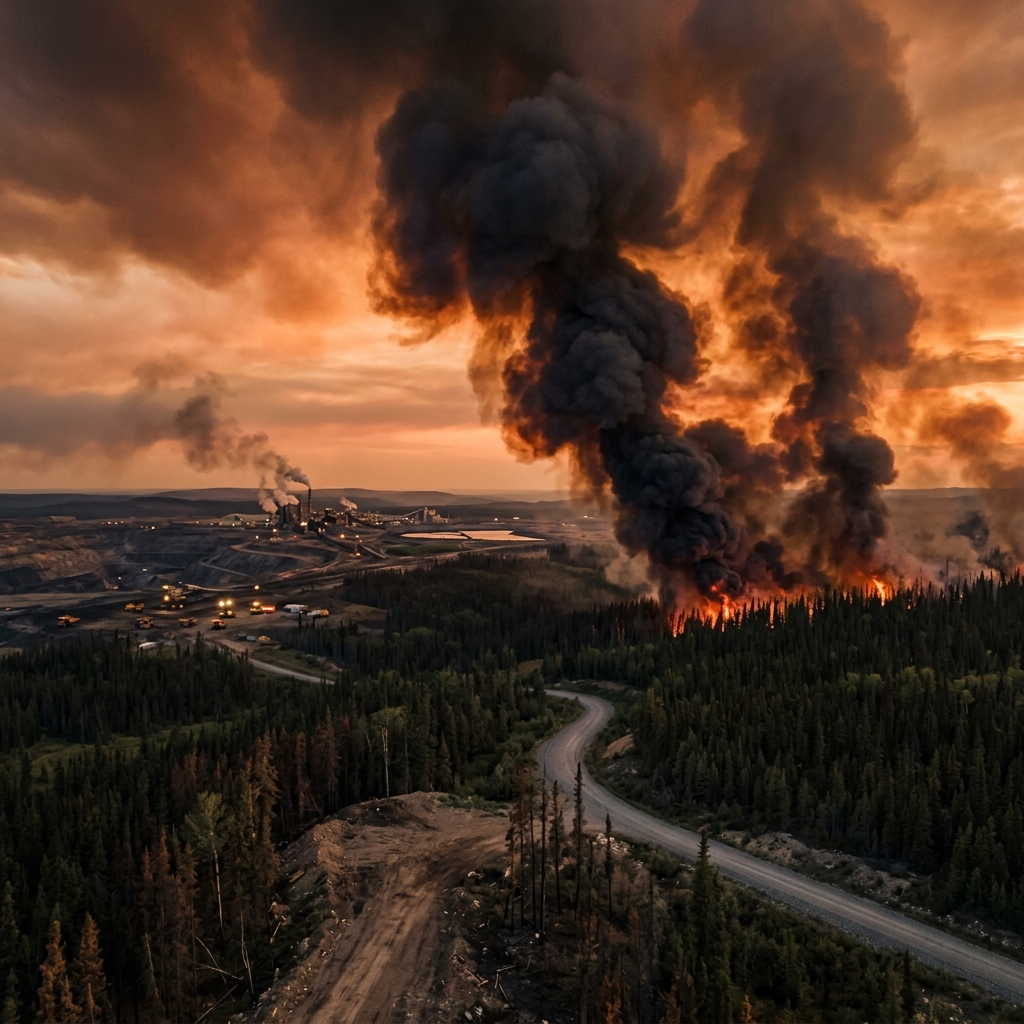 Figure 1: Wildfire smoke columns rise near in-situ oil sands operations in Alberta. Source: Canada Wildfire Log.
Wildfires create a particularly frustrating kind of oil supply risk. A company may have productive wells, functioning equipment, available pipeline capacity, and buyers ready for crude, yet still need to curtail operations because roads are closed, staff must evacuate, or smoke makes field work unsafe. In other words, the reservoir may be fine. Everything above it becomes the problem.
Canada is one of the largest suppliers of crude to the United States, and Alberta’s oil sands provide large volumes of heavy oil that many U.S. refineries are designed to process. Even temporary interruptions can affect regional pricing, pipeline flows, refinery planning, and the discount between Canadian crude and U.S. benchmarks.
The timing is especially important because Alberta and Ontario recently proposed a roughly 2,050-mile pipeline that could initially move about 500,000 barrels per day from Western Canada to refineries in Ontario. Supporters argue that it could eventually carry 800,000 barrels per day and reduce reliance on more vulnerable or politically complicated export routes.
Reuters: Alberta and Ontario propose new Canada pipeline
https://www.reuters.com/business/energy/alberta-ontario-propose-new-2050-mile-canada-oil-pipeline-2026-07-06/
The project remains a proposal, and pipelines in Canada have a habit of spending more time in meetings than in the ground. Still, the logic is clear. Canada wants more control over where its oil goes, just as the United States wants more control over where its energy comes from.
Permian Basin News: M&A Shifts from Mega-Mergers to Bolt-On Acquisitions
The local Permian story is quieter, but it may be more actionable for Wildcatters readers.
After several years of enormous acquisitions, Permian dealmaking is becoming more focused. Recent analysis reported by the Midland Reporter-Telegram suggests buyers are moving away from huge land grabs and toward smaller bolt-on acquisitions, mineral and royalty transactions, infrastructure-supported production, and assets that improve existing operations.
Midland Reporter-Telegram: Permian M&A shifts to bolt-ons
https://www.mrt.com/business/oil/article/midland-tx-permian-basin-ma-bolt-ons-22343822.php
That is important because it changes who can participate. A $60 billion corporate acquisition belongs to lawyers, investment banks, and companies with their names on skyscrapers. A producing package, mineral position, non-operated interest, or bolt-on lease can belong to an independent operator, a family office, or a buyer who knows the county better than the seller does.
The “Permania” phase may be cooling, but the basin itself is not becoming irrelevant. Buyers are simply demanding a clearer strategic fit. They want infrastructure access, operating synergies, predictable production, quality drilling inventory, and assets that improve cash flow rather than merely expanding a map.
Texas Drilling Permits: Operators Target Wolfcamp and Spraberry Formations
Recent Railroad Commission permit activity shows continued development across multiple Permian counties. The Midland Reporter-Telegram highlighted new horizontal permits involving operators such as Black Swan, Chevron, Summit Petroleum, FireBird Energy, WPX Energy Permian, Anadarko, Pioneer, and Bayswater.
The projects include targets in the Spraberry, Barnett, Wolfcamp, and Bone Spring formations, with some planned wells extending to depths approaching 14,000 feet.
Midland Reporter-Telegram: Recent Permian drilling permits
https://www.mrt.com/business/oil/article/permian-basin-tx-drilling-permits-22333984.php
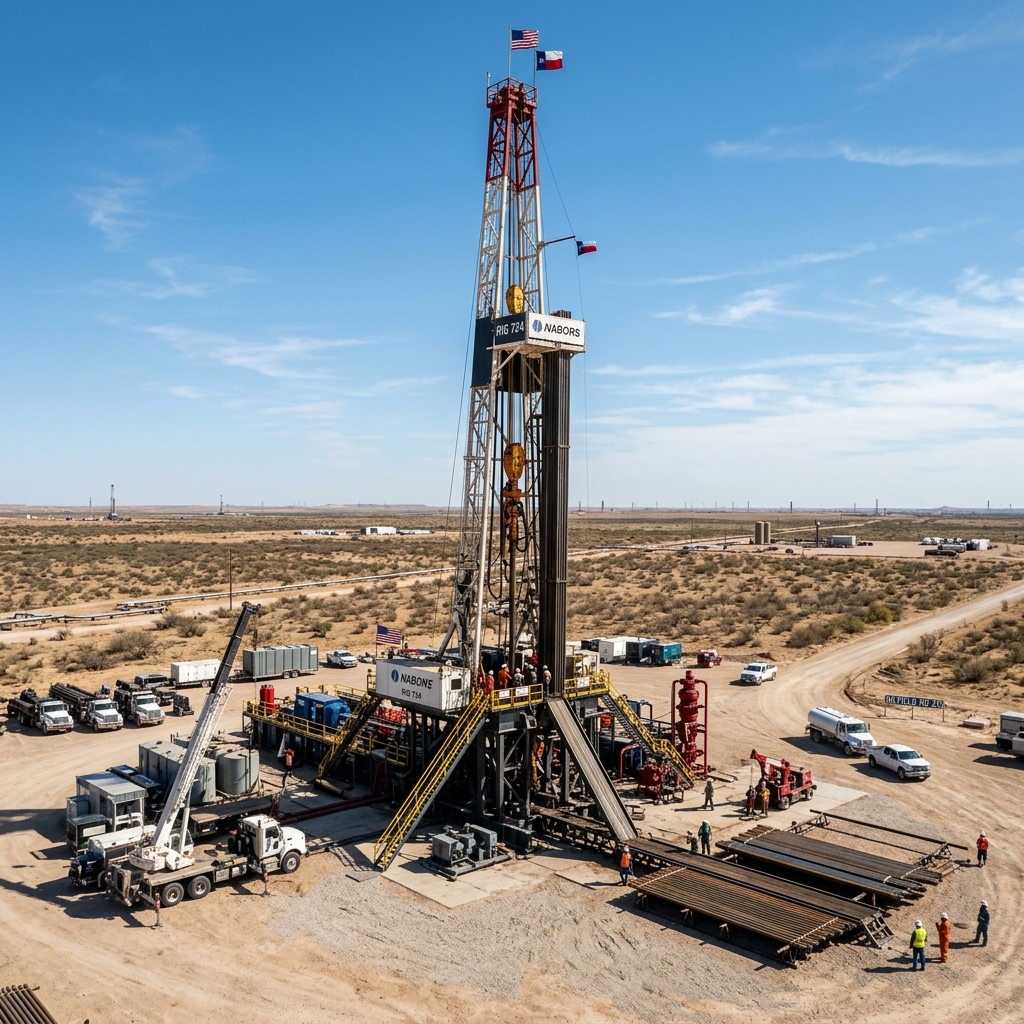 Figure 2: Active drilling rig targeting Wolfcamp formations in Midland County. Source: Permian Basin Photo.
Permits do not automatically become producing wells, but they provide a useful view into operator intent. Companies do not spend money on engineering, land, regulatory filings, and development planning for entertainment. Permitting activity shows where operators believe future capital may generate returns.
For landmen, brokers, service companies, mineral owners, and smaller investors, permit data is also an early signal. New activity can change leasing interest, mineral values, service demand, water needs, gathering requirements, and the outlook for nearby acreage.
This is exactly the kind of information Wildcatters Intelligence should help surface. By the time a producing well appears in a quarterly report, much of the opportunity has already been priced. The advantage comes from seeing the activity while it is still a permit, a lease, a title issue, or a conversation.
Mineral Rights Deals: Viper and Alliance Complete Large Royalty Acquisitions
Mineral and royalty interests remain active, even as buyers become more disciplined elsewhere.
Viper Energy recently completed its acquisition of Riverbend Oil & Gas IX mineral and royalty interests for $337 million in cash plus 3.7 million shares. Alliance Resource Partners separately completed a $206.2 million acquisition of interests in AllDale Minerals III and IV, gaining exposure across the Permian, Anadarko, Bakken, and Haynesville.
Midland Reporter-Telegram: Permian royalty deals completed
https://www.mrt.com/business/oil/article/permain-basin-tx-royalty-deals-22338875.php
These transactions show why mineral and royalty assets continue attracting capital. They can provide commodity exposure without requiring the buyer to operate wells, manage field crews, repair equipment, or explain to a pumper why the company credit card declined at 5:30 in the morning.
Royalties are not risk-free. Their value depends on commodity prices, operator quality, development timing, production decline, title, and the specific burden attached to the acreage. But high-quality mineral positions remain attractive because they can offer long-duration exposure to drilling activity and production without the full cost structure of an operating company.
For individual mineral owners, large institutional deals can be both encouraging and misleading. They confirm buyer demand, but they do not mean every acre deserves a premium valuation. Location, existing production, nearby permits, operator activity, depth rights, and title quality still determine what a buyer will pay.
Admiral Permian Resources: Modeling Deals Around Resilient $65 Oil
One of the more interesting recent local stories involves Admiral Permian Resources, which has built and sold Permian positions while maintaining a focus on creative deal structures and localized operating knowledge.
The company told the Midland Reporter-Telegram that it generally models opportunities around $65 oil. Admiral currently produces approximately 30,000 barrels per day and expects to drill roughly 65 wells this year, according to the report.
Midland Reporter-Telegram: Admiral Permian models around $65 oil
https://www.mrt.com/business/oil/article/admiral-permian-basin-deals-tx-22338863.php
The $65 assumption matters more than any heroic oil forecast. An operator raising capital should not need a naval blockade, a pipeline explosion, and three emergency OPEC meetings for the deal to work. Investors want to see resilience. They want to know whether an asset survives ordinary prices, ordinary problems, and ordinary mistakes.
A realistic model does not eliminate risk. It shows that management understands risk. That may be the dividing line in today’s capital market. Money is still available for oil and gas, but investors increasingly want assets that work without a miracle. Producing reserves, clean title, manageable operating costs, existing infrastructure, sensible leverage, and credible downside cases are becoming more important than enormous acreage numbers.
Record U.S. Crude Production: Efficiency Gains Keep Permian Output Growing
The broader U.S. production story remains remarkable. The United States produced a record 13.6 million barrels per day in 2025, with the Permian contributing approximately 6.6 million barrels per day, according to EIA data reported by the Midland Reporter-Telegram.
That production growth occurred even as the number of active rigs declined and average WTI prices weakened. Improved drilling speed, longer laterals, better completion designs, more efficient pad development, and stronger operating practices allowed producers to generate more output with less equipment.
Midland Reporter-Telegram: U.S. crude production hits records
https://www.mrt.com/business/oil/article/us-crude-oil-production-record-permian-tx-22340793.php
That efficiency story is strategically important. America does not need to match every overseas disruption barrel for barrel overnight. It needs a productive domestic industry that can remain competitive, attract investment, maintain infrastructure, and respond rationally when prices justify additional development.
The danger is assuming efficiency means the country can stop investing. Productivity gains are not magic. Wells decline. Equipment wears out. Workers retire. Pipelines fill. Good acreage gets developed. Maintaining U.S. production requires continuing investment in drilling, completions, infrastructure, technology, people, and smaller operators capable of developing assets that no longer fit the largest companies.
Mom-and-Pop Oil and Gas: Capturing Local Value in a Volatile Energy Market
The global headlines are creating a market with higher prices and higher uncertainty. That can improve near-term cash flow, but it should not become an excuse for loose underwriting.
For independent operators, today’s environment rewards assets that can perform across multiple price scenarios. Higher crude can help fund workovers, reduce debt, and improve acquisition capacity. It can also encourage sellers to raise expectations before buyers have adjusted their price decks.
For mineral owners, geopolitical premiums may improve royalty checks and buyer interest, but the value of a mineral position still depends on development likelihood and production quality. A temporary price spike cannot fix bad title or convince an operator to drill acreage outside its capital plan.
For brokers and landmen, local intelligence is becoming more valuable. Permits, operator changes, nearby acquisitions, title cleanup, lease expirations, and family ownership transitions can create opportunities before a formal sales process begins.
For investors and family offices, the lesson is not to chase the latest international headline. It is to use stronger pricing as an opportunity to find durable assets, experienced operators, and deals with multiple ways to create value.
The Strait of Hormuz may move the price of oil. It does not know which lease in Reagan County needs a workover, which mineral family wants liquidity, or which independent operator can turn an overlooked package into a profitable business. That remains the local advantage.
The Wildcatters Take: Building Domestic Energy Strategy One Deal at a Time
Every time the Strait becomes unstable, America rediscovers energy security. Every time crude rises, Washington remembers domestic production. Every time the situation calms down, attention moves somewhere else. That cycle needs to change.
The United States is already the world’s largest crude oil producer. The goal should not simply be to produce the most barrels this quarter. It should be to build the world’s deepest, strongest, and most investable energy ecosystem.
That includes the majors, but it also includes independent operators, mineral owners, landmen, brokers, service companies, engineers, private investors, family offices, and communities across Texas, Oklahoma, New Mexico, Louisiana, North Dakota, Pennsylvania, and beyond.
That is why Wildcatters exists. The marketplace should help good assets find qualified buyers. Intelligence should help smaller companies see activity earlier. Capital tools should help credible operators explain their opportunities. Better information should allow mom-and-pop oil and gas to compete without needing the budgets of Big Oil.
The Strait can keep changing its status. America should keep building.
Something Lighter Before You Go: Midland Prepares for National Petroleum Day
Midland is preparing to celebrate National Petroleum Day in August with a downtown tailgate featuring live music, food trucks, industry exhibits, and a separate “Landman”-themed gala at the Petroleum Club.
Midland Reporter-Telegram: National Petroleum Day in Midland
https://www.mrt.com/business/oil/article/national-petroleum-day-midland-tx-22339480.php
That may be the most West Texas sentence ever written. Some cities celebrate petroleum with policy panels. Midland is putting it on Wall Street, adding food trucks, and apparently dressing it like an episode of “Landman.”
Honestly, fair enough.
 Figure 3: Inside the Petroleum Club of Midland preparing for upcoming gala events. Source: Petroleum Day Gala.
Top Reads
- Reuters: Oil remains near one-month highs as U.S.-Iran risks grow
https://www.reuters.com/business/energy/oil-prices-rise-4th-day-us-strikes-iran-raise-fears-wider-conflict-2026-07-16/ - Reuters: Gulf markets react to renewed U.S. strikes on Iran
https://www.reuters.com/world/middle-east/most-gulf-markets-subdued-amid-renewed-us-strikes-iran-2026-07-16/ - EIA: World Oil Transit Chokepoints
https://www.eia.gov/international/analysis/special-topics/World_Oil_Transit_Chokepoints - Reuters: Wildfire season returns to Canada’s oil sands
https://www.reuters.com/business/energy/wildfire-season-returns-canadas-oil-sands-2026-05-31/ - Reuters: Alberta and Ontario propose a major new Canadian oil pipeline
https://www.reuters.com/business/energy/alberta-ontario-propose-new-2050-mile-canada-oil-pipeline-2026-07-06/ - Midland Reporter-Telegram: Permian dealmaking shifts toward bolt-on acquisitions
https://www.mrt.com/business/oil/article/midland-tx-permian-basin-ma-bolt-ons-22343822.php - Midland Reporter-Telegram: Recent Permian Basin drilling permits
https://www.mrt.com/business/oil/article/permian-basin-tx-drilling-permits-22333984.php - Midland Reporter-Telegram: Viper and Alliance complete royalty acquisitions
https://www.mrt.com/business/oil/article/permain-basin-tx-royalty-deals-22338875.php - Midland Reporter-Telegram: Admiral Permian models around $65 oil
https://www.mrt.com/business/oil/article/admiral-permian-basin-deals-tx-22338863.php - Midland Reporter-Telegram: Permian growth leads record U.S. production
https://www.mrt.com/business/oil/article/us-crude-oil-production-record-permian-tx-22340793.php - Baker Hughes Rig Count
https://rigcount.bakerhughes.com/ - Texas Railroad Commission News
https://www.rrc.texas.gov/news/