🌅 Overnight Barrel | June 16, 2026
Wildcatters EditorialIf you shut your laptop Friday afternoon and just checked your phone this morning, here's what happened while the rest of the world was arguing about oil, politics, basketball, and whether energy markets have finally found some stability.
The biggest story overnight was not that oil moved lower. It was why oil moved lower.
Markets rallied after news of a framework agreement between the United States and Iran aimed at ending months of conflict and reopening the Strait of Hormuz. The agreement sent Brent crude tumbling toward the low $80s and helped push global stock markets to record highs as investors began pricing in the return of oil supplies that had been trapped or disrupted during the conflict. Reuters reported that traders are now betting the worst-case supply scenarios are off the table, although energy executives continue warning that it could take months for oil and gas production, refining, and shipping infrastructure to fully recover.
Source: https://www.reuters.com/commentary/reuters-open-interest/global-markets-view-usa-2026-06-15/ https://www.reuters.com/video/business-energy/
For energy investors, the lesson is simple: the market has moved from fearing a supply shock to wondering how quickly supply returns. Those are two very different conversations.
At the same time, the Strategic Petroleum Reserve quietly hit a milestone that should probably be getting more attention. Reuters reported that the U.S. SPR has fallen to roughly 340 million barrels, the lowest level since 1983. The drawdowns were tied to emergency actions designed to ease fuel costs during the recent conflict, but the result is that America's emergency oil stockpile is now sitting near four-decade lows.
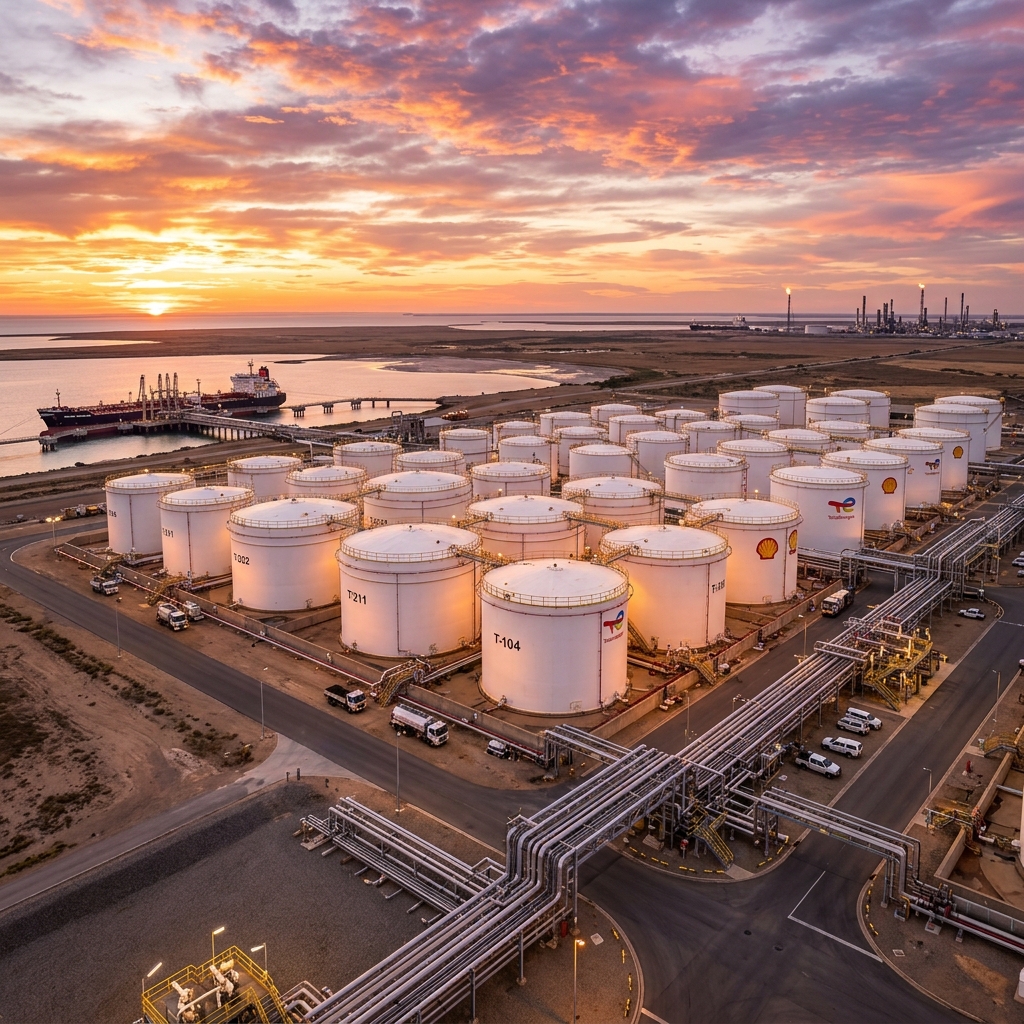 Figure 1: A massive crude oil storage facility with cylindrical tanks and pipelines. The U.S. Strategic Petroleum Reserve has declined to 340 million barrels—the lowest level since 1983—leaving policymakers with a smaller cushion for future supply disruptions. Source: SPR Operations / Department of Energy.
That doesn't mean the country is running out of oil. Far from it. The United States remains the world's largest oil exporter. But it does mean policymakers have less cushion available if another major supply disruption emerges later this year.
Meanwhile, natural gas keeps quietly building momentum.
The market remains focused on LNG exports, rising electricity demand, and the buildout of AI infrastructure. The EIA continues forecasting record U.S. natural gas production and demand through the next several years as export facilities expand and power demand climbs.
For independent operators, this may be the most important trend in energy right now. Oil still drives headlines. Natural gas is increasingly attracting long-term capital.
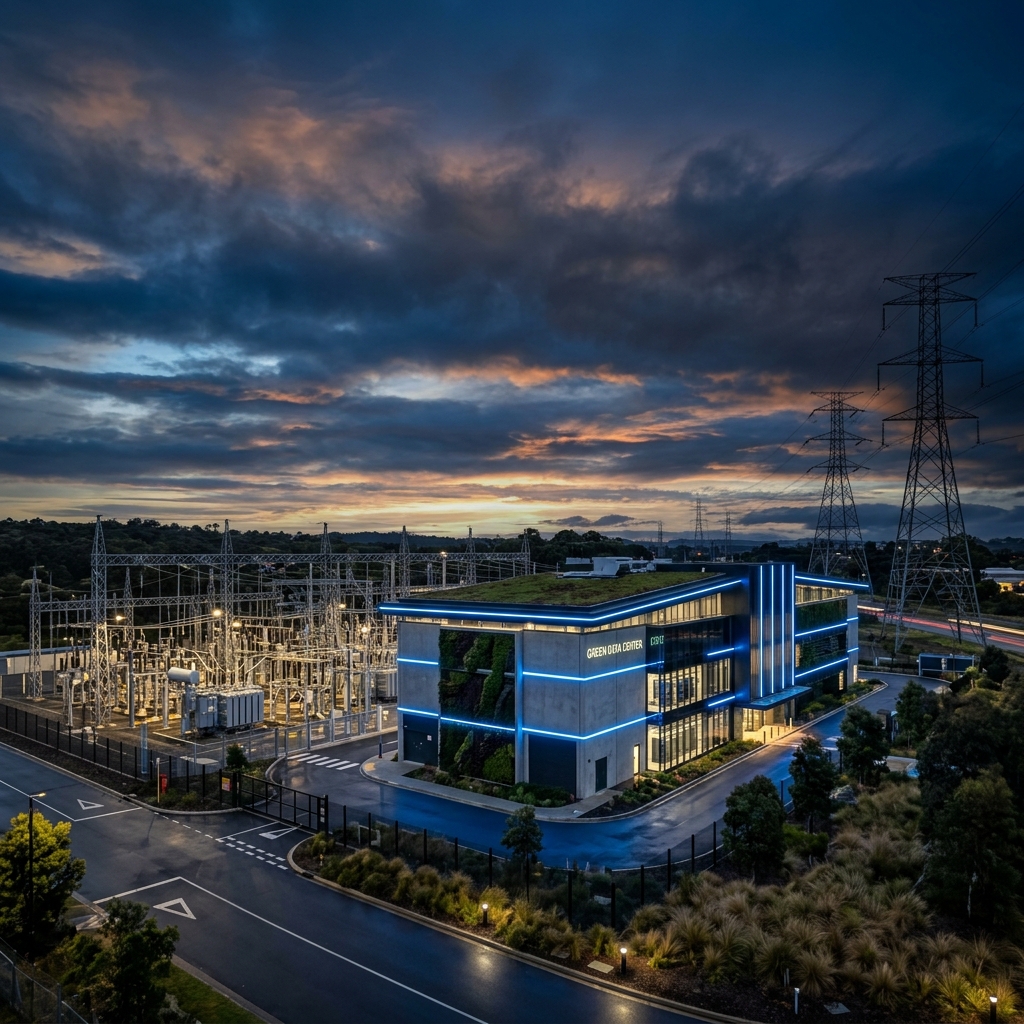 Figure 2: A modern green data center facility situated next to electrical substation equipment. Exponential growth in data center workloads and AI computing is driving structural, long-term demand for natural gas-fired electrical generation. Source: Electrical Power Research Group.
Outside of energy, President Trump remained front and center in the news cycle following his highly publicized 80th birthday weekend. Markets also began focusing on this week's G7 summit, upcoming central bank meetings, and whether lower oil prices could ease inflation pressures and eventually support lower interest rates.
And yes, Knicks fans are still celebrating.
At this point, New Yorkers have told the story so many times that the championship may actually last longer than the playoffs.
Three Things We're Watching Today
1. Oil's New Floor Can crude hold the low $80s, or does the market decide supply is still tighter than expected?
2. Natural Gas Capital Watch for additional LNG, pipeline, and gas acquisition announcements. That's where some of the smartest energy money is moving.
3. Interest Rates Lower oil prices could reduce inflation pressure, giving central banks more flexibility later this year.
Coffee Take ☕
The market spent the last three months asking what happens if the world loses millions of barrels per day.
Now it's asking what happens when those barrels come back.
That shift may define the rest of the summer.