The Real Story in Oil & Gas This Week: Why Local Dealmakers May Have the Edge
Wildcatters EditorialOil prices grabbed the headlines this week.
WTI crude traded in the mid-$90s while Brent approached $100 per barrel as markets continued reacting to Middle East disruptions, declining inventories, and uncertainty surrounding global supply routes. Reuters reported that U.S. crude inventories fell by 8 million barrels last week, roughly double analyst expectations, while the International Energy Agency warned global inventories could reach critically low levels heading into peak summer demand.
The immediate takeaway is obvious: higher prices generally support producers.
The more important question is whether higher prices translate into a new growth cycle.
So far, the answer appears to be no.
Wall Street Sees Higher Prices, But Not a Return to the Shale Boom
The Energy Information Administration expects global inventories to continue falling, helping support elevated crude prices throughout much of 2026.
Source: https://www.eia.gov/outlooks/steo/
Historically, prices in this range would have triggered a surge in drilling activity across the Permian, Eagle Ford, Bakken, and other major basins.
This cycle looks different.
Public operators remain focused on returns, not production growth. Investors continue demanding free cash flow and balance-sheet strength rather than aggressive expansion.
The result is an industry generating stronger profits while remaining surprisingly disciplined.
That has helped support a resurgence in mergers and acquisitions.
According to Enverus, U.S. upstream deal activity reached $38 billion during the first quarter, the highest quarterly total in two years.
The largest deals continue happening among public companies, but underneath the headline transactions another market is quietly becoming more active.
The private market.
Why Independent Operators Matter More in This Market
One of the least discussed developments in oil and gas today is how consolidation among major operators is creating opportunities further down the food chain.
As companies become larger, more assets become non-core.
Properties producing a few hundred barrels per day rarely attract attention from billion-dollar operators. Small working-interest packages, mature PDP assets, scattered mineral positions, and legacy fields often fall below the threshold of institutional interest.
That does not mean they lack value.
In many cases, these are exactly the assets being pursued by independent operators, family offices, mineral buyers, and local investment groups.
This is where brokers and land professionals continue to play an outsized role.
While public markets focus on earnings calls and analyst reports, much of the industry's transaction activity still originates through relationships, title work, acreage research, and local deal sourcing.
Many of the best opportunities never run through a formal investment process.
They begin with a landman identifying fragmented ownership.
A broker uncovering an off-market package.
A mineral owner considering a sale.
A local operator seeking liquidity.
In a market where capital remains selective, access to opportunities may be more valuable than access to capital itself.
The Supply Problem Nobody Is Talking About
Another important development this week came from the U.S. shale patch itself.
Reuters reported that drilled-but-uncompleted wells, commonly known as DUCs, have fallen to their lowest level on record.
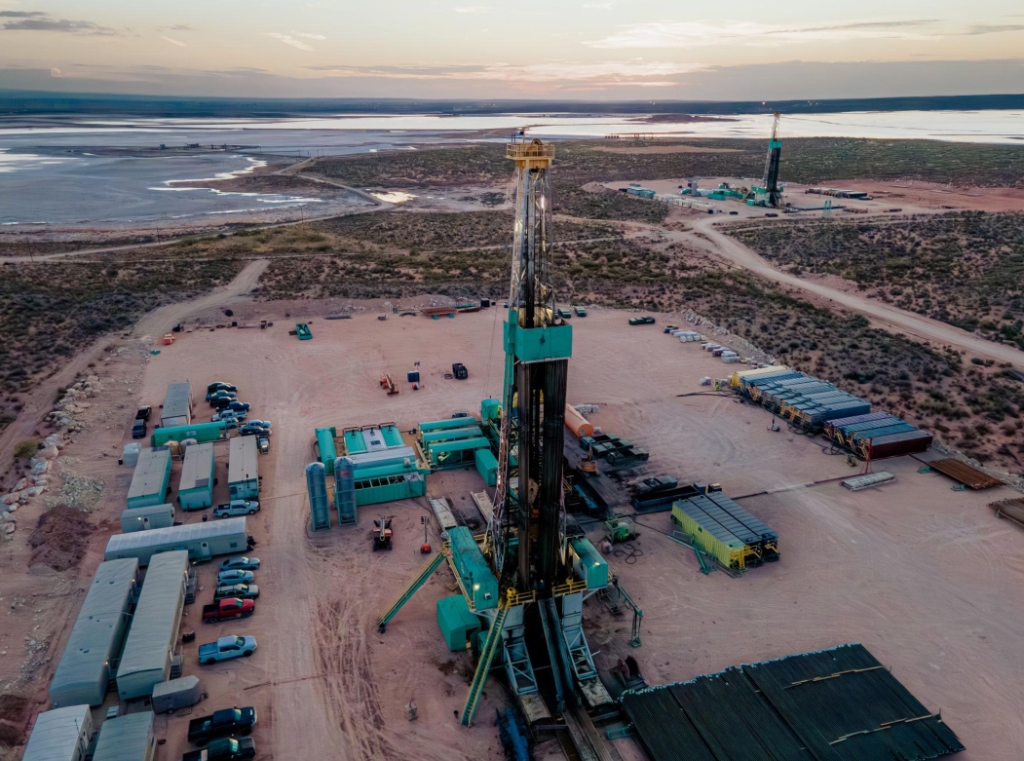 Figure 1: A Permian Basin land drilling rig site. U.S. shale operators face a record-low backlog of drilled-but-uncompleted wells (DUCs), requiring new drilling activity to sustain production levels. Source: Field Operations.
For years, DUCs acted as a supply cushion.
Operators could rapidly complete existing wells when prices improved. That flexibility helped the industry respond quickly to market opportunities.
That cushion is disappearing.
According to EIA data cited by Reuters, DUC inventories have now declined for more than a year and sit at record lows.
The implication is significant.
Future production growth will require new drilling, new completions, and new capital.
The industry's ability to rapidly flood the market with new supply is not what it was five years ago.
That may help support commodity prices if global disruptions continue.
Overseas Capital Is Chasing New Barrels
The international market is telling a similar story.
While U.S. operators remain disciplined, capital continues flowing toward large-scale resource opportunities overseas.
Chevron announced plans this week to invest up to $13.8 billion in Argentina's Vaca Muerta shale formation, one of the world's largest unconventional oil and gas resources.
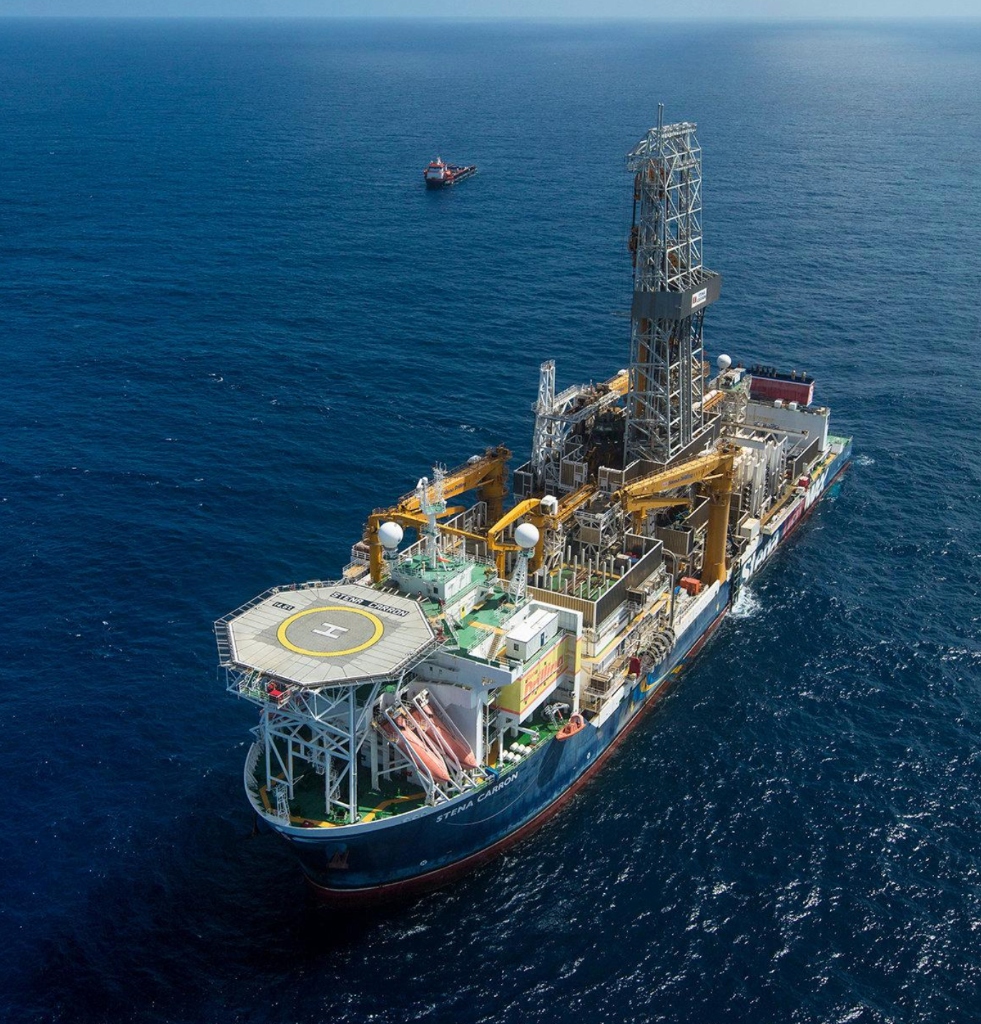 Figure 2: The Stena Carron offshore drillship operating on deepwater projects in South America. Conventional offshore exploration is attracting major long-term capital from majors like Chevron and ExxonMobil. Source: Offshore Intelligence.
At the same time, global investment in natural gas projects is expected to exceed $330 billion this year, the highest level in a decade according to the International Energy Agency.
The market's message is becoming clear.
Investors are willing to fund energy.
But they want scale, infrastructure, long-life reserves, and predictable returns.
Whether that capital ends up in Guyana, Argentina, LNG terminals along the Gulf Coast, or mature producing assets in West Texas depends on where investors see the best risk-adjusted opportunity.
What We're Watching
-
Can WTI hold above $90 per barrel?
-
Will higher prices accelerate private-market transactions?
-
Can U.S. shale grow production with DUC inventories at record lows?
-
Will LNG and natural gas continue attracting capital away from oil-focused projects?
-
How much deal flow emerges from independent operators and mineral owners if elevated prices persist?
Top Reads of the Week
Oil prices rise as Middle East tensions increase: https://www.reuters.com/business/energy/oil-prices-rise-new-middle-east-hostilities-flare-talks-stall-2026-06-03/
U.S. shale DUC inventory hits record low: https://www.reuters.com/business/energy/record-low-us-shale-well-backlog-curbs-fast-output-gains-amid-export-surge-2026-05-29/
U.S. upstream M&A reaches two-year high: https://www.reuters.com/legal/transactional/us-upstream-oil-gas-dealmaking-hit-two-year-high-q1-2026-2026-05-13/
Chevron plans $13.8 billion Argentina investment: https://www.reuters.com/business/energy/chevron-applies-argentina-tax-break-program-with-138-billion-investment-plan-2026-06-02/
Natural gas investment hits 10-year high: https://www.reuters.com/business/energy/natural-gas-spending-hit-10-year-high-2026-oil-investment-falls-iea-says-2026-05-28/