U.S. Oil Exports Hit Records as Capital Returns to Energy and New Offshore Opportunities Emerge
Wildcatters EditorialThe U.S. oil and gas market is entering an interesting phase.
On one hand, capital is flowing back into the sector. M&A activity has accelerated, drilling activity is improving, and investors are once again allocating money toward energy. On the other hand, operators face a growing challenge: the industry has less spare production capacity than many realize.
According to Reuters, U.S. crude exports reached a record 5.6 million barrels per day in May as global buyers scrambled to replace barrels disrupted by tensions involving Iran and ongoing uncertainty surrounding the Strait of Hormuz.
The surge highlights how important U.S. shale has become to global energy security. Asian and European refiners increasingly view U.S. crude as one of the most reliable supply sources available.
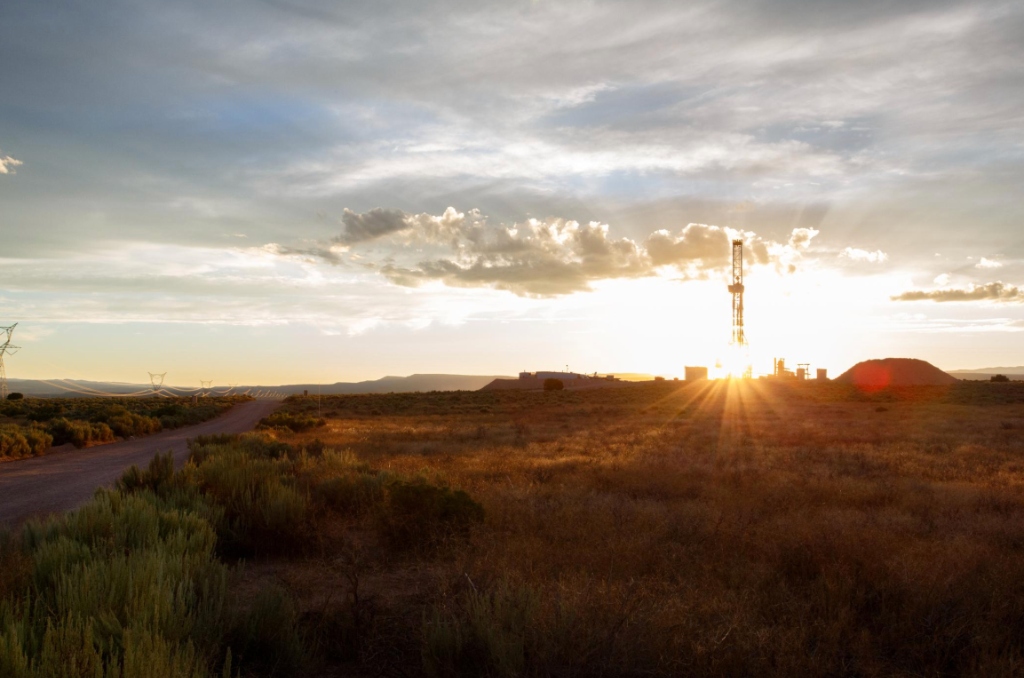 Figure 1: High-efficiency land drilling rig operating at sunset. U.S. shale operators remain focused on capital discipline and efficiency gains as drilled-but-uncompleted well inventories reach record lows. Source: Field Operations.
Yet beneath the strong export numbers, there is a growing constraint.
Reuters reported this week that U.S. shale producers now hold the lowest inventory of drilled-but-uncompleted wells (DUCs) on record. For years, DUCs served as a supply buffer that allowed operators to quickly bring production online when prices improved. Today, that backlog has largely disappeared.
That means future growth will require new drilling, new completions, and ultimately more capital.
The market appears to be responding.
According to Enverus, upstream oil and gas dealmaking reached $38 billion during the first quarter of 2026, the highest quarterly total in two years. While the Devon-Coterra merger accounted for a large portion of that activity, the broader trend is encouraging. Investors are once again deploying capital into producing assets, royalties, infrastructure, and high-quality acreage positions.
This matters for more than just the majors.
Across Texas, Oklahoma, Louisiana, Appalachia, and New Mexico, independent operators continue to acquire PDP packages, mineral interests, and non-operated working interests. While billion-dollar mergers dominate headlines, many of the most active buyers remain smaller private companies, family offices, and experienced operators focused on generating cash flow rather than chasing production growth.
In many ways, these 'mom-and-pop' operators remain the backbone of American oil and gas. They are often willing to acquire assets too small for public companies to care about, extending field life and creating value where larger operators see limited opportunity.
Meanwhile, overseas developments are creating new opportunities and new competition.
ExxonMobil continues expanding offshore Guyana, one of the most significant oil discoveries of the past decade. The company recently sought approval for another development project tied to the Haimara discovery within the Stabroek Block, which continues to deliver world-class results.
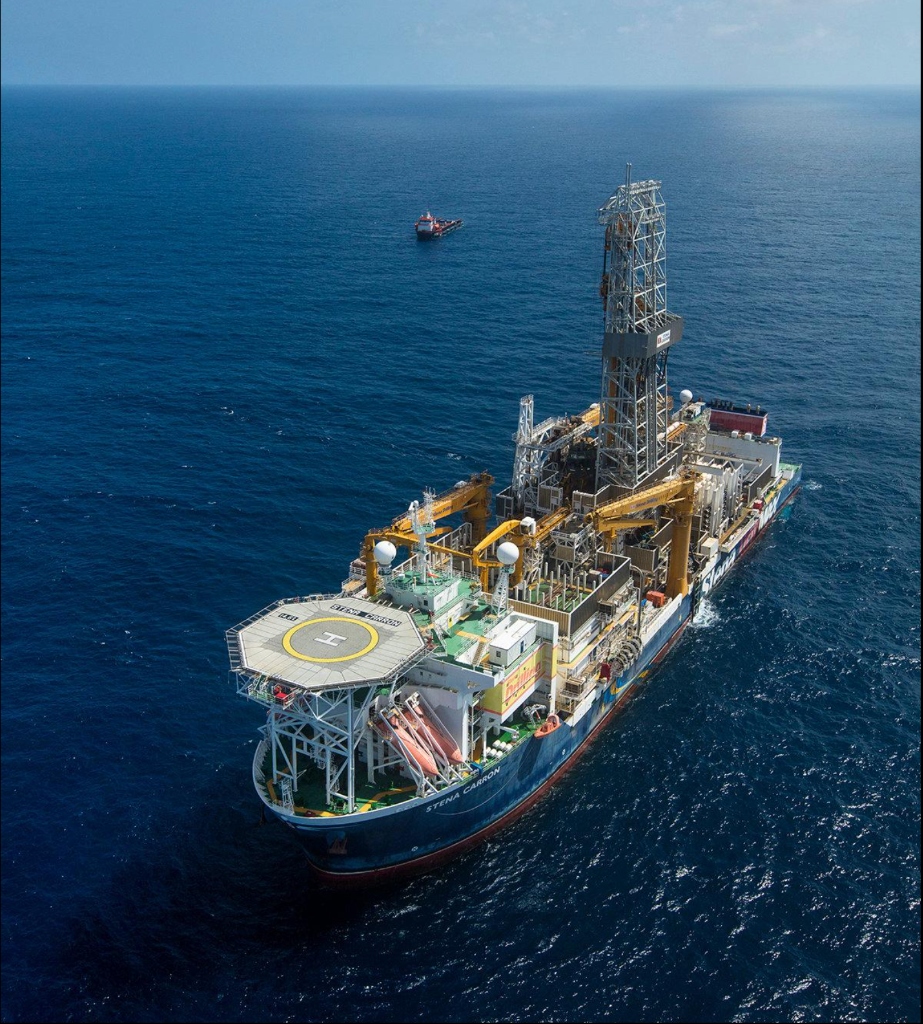 Figure 2: The Stena Carron offshore drillship operating on deepwater projects in South America. Conventional offshore exploration is attracting major long-term capital as producers seek large-scale replacement reserves. Source: Offshore Intelligence.
At the same time, Occidental Petroleum acquired a stake in Exxon-operated deepwater acreage offshore Trinidad and Tobago, signaling growing industry confidence in the region's exploration potential.
These offshore discoveries matter because they represent some of the few remaining large-scale conventional opportunities available globally. While U.S. shale remains the world's most flexible source of supply, offshore projects in Guyana, Brazil, and Trinidad are attracting significant long-term investment.
Natural gas is another area attracting capital.
The International Energy Agency recently projected natural gas investment will reach a ten-year high in 2026, driven largely by LNG demand and infrastructure expansion.
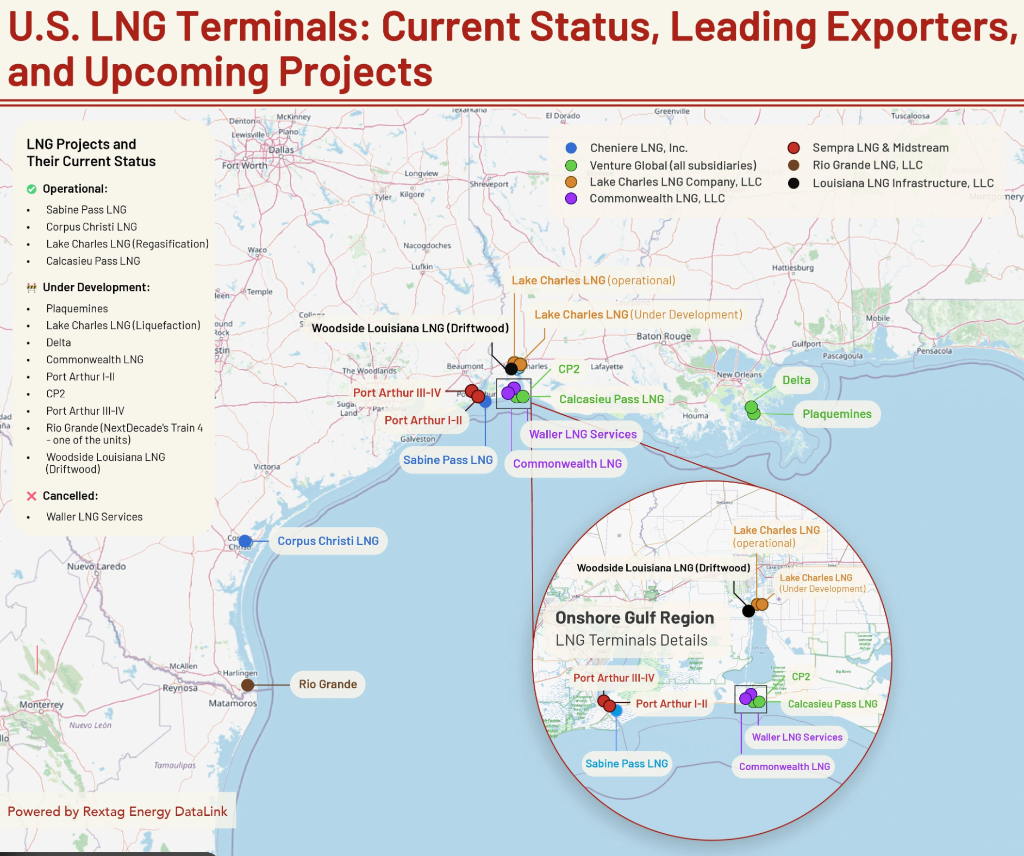 Figure 3: U.S. Gulf Coast LNG terminals, showing operational, under development, and upcoming projects. Natural gas spending is projected to hit a 10-year high. Source: Rextag Energy DataLink.
For operators positioned near LNG infrastructure or key pipeline corridors, that trend may become one of the most important investment themes of the decade.
Why It Matters
The story in energy today is not simply oil prices.
The bigger story is capital.
Investors are returning to the sector, but they are doing so selectively. Capital is flowing toward quality assets, infrastructure, natural gas opportunities, royalties, and operators capable of generating durable cash flow.
At the same time, U.S. shale producers have less spare capacity than many assume, creating a market where new drilling and smart capital allocation matter more than ever.
For independent operators, mineral owners, and investors, that may create some of the best opportunities the industry has seen in years.
What We're Watching
• U.S. crude export volumes
• Rig count growth across the Permian
• Additional upstream M&A announcements
• LNG infrastructure financing
• Guyana and Trinidad offshore development activity
• Capital raises targeting PDP-focused acquisitions
• Natural gas pricing and Gulf Coast demand growth